Berkeley County Mosque Proposal Sparks Controversy, Anti-Muslim Rhetoric and Religious Freedom Debate
A proposed Islamic center in Summerville has drawn opposition from residents, a controversial online petition, and public statements from Congresswoman Nancy Mace. As the debate intensifies, questions about religious freedom, constitutional protections, and fair treatment have moved to the forefront.
By What’s Going On In Charleston | November 18, 2026
A proposal to establish a mosque and Islamic center along College Park Road in Berkeley County has become the center of a growing controversy involving local residents, religious organizations, elected officials, and civil rights advocates.
What began as a discussion surrounding a proposed development has expanded into a broader debate over religion, community identity, and the constitutional rights of Muslim Americans.
Some residents have raised concerns about traffic, drainage, parking, zoning, and the potential impact of a new institutional development on nearby neighborhoods.
Others have expressed opposition to the presence of an Islamic religious institution in Berkeley County itself.
Those concerns are not interchangeable.
As public comments, social media posts, and political statements continue circulating, understanding what has actually been proposed—and what has not—is essential.
What Is Being Proposed on College Park Road?
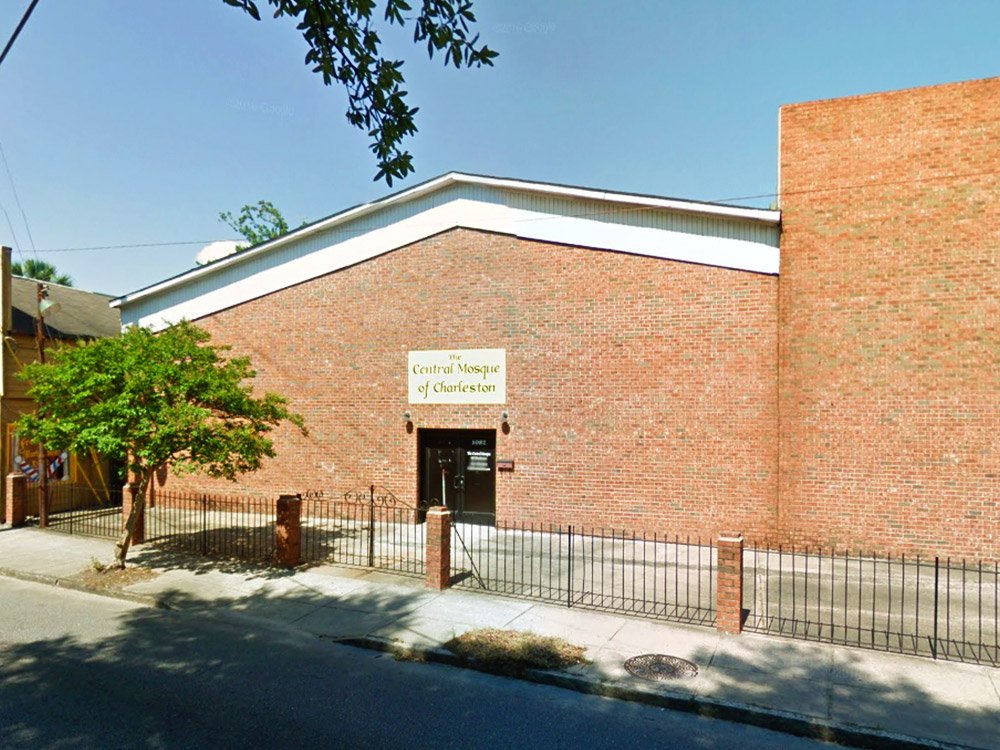
The Central Mosque of Charleston is seeking to develop a new Islamic center at 1013 College Park Road in Summerville, South Carolina.
According to the organization’s official project website, the facility is intended to serve as a place for religious worship, Islamic education, youth programming, and community gatherings.
The organization purchased approximately 12 acres of property earlier in 2026.
In an interview with WCBD News 2, Central Mosque of Charleston President Shahid Husain explained that the organization’s existing downtown Charleston location no longer provides sufficient room for its growing congregation.
The proposed center would allow the organization to accommodate additional worshippers and better serve Muslim families living throughout the growing Lowcountry.
Husain said construction could begin in approximately three to five years, depending on fundraising and the project’s development process.
The organization intends to develop the property in phases, using contributions from local donors.
As of November 18, 2026, no formal development plan has been submitted to Berkeley County for approval.
The mosque has met with county staff, but no final building plan, traffic study, or construction approval has been presented publicly through the process described in local reporting.
That distinction matters when evaluating both the proposal and public claims about its potential effects.
Berkeley County Council Meeting Draws Heated Opposition
On Monday, November 16, residents addressed Berkeley County Council concerning the proposed development.
The public comment period drew strong opposition, with speakers raising concerns about the community’s future and the potential presence of an Islamic institution in the area.
According to reporting from Live 5 News and WCBD News 2, some speakers argued that South Carolina’s Christian identity should influence whether an Islamic center is welcomed.
Other speakers expressed concern about Sharia law, referenced communities with larger Muslim populations, or opposed the mosque’s establishment in Berkeley County altogether.
Supporters of the proposed center defended the constitutional rights of Muslim Americans and encouraged residents to extend the same religious freedom to their Muslim neighbors that they expect for themselves.
The meeting reflected a significant divide between objections based on specific land-use questions and objections based on the religious identity of the proposed institution.
Berkeley County Council did not vote to approve or deny the mosque proposal on November 16.
No formal development plan was before council for approval.
An Online Petition Adds to the Controversy
Opposition to the proposed development has also surfaced through a Change.org petition titled:
“Halt mosque construction and extremist neighborhoods”
The petition calls on Berkeley County officials to preserve the property’s existing residential zoning and reject certain proposed zoning changes, variances, or special exceptions that would allow large-scale development.
Among the concerns identified are traffic congestion, parking, drainage, noise, and neighborhood compatibility.
These are legitimate categories of inquiry for any substantial development project, whether the proposed facility is religious, commercial, educational, or residential.
However, the petition’s title raises another issue.
Its use of the word “extremist” is not accompanied by evidence establishing that the Central Mosque of Charleston or its proposed facility is associated with extremist activity.
A development proposal should not be treated as evidence of a threat simply because the institution involved belongs to a particular religion.
Likewise, concerns about traffic, drainage, and neighborhood impacts should be evaluated through applicable engineering requirements, development reviews, and available documentation.
At this stage, those potential impacts remain questions to be assessed rather than established consequences of an approved development plan.
Congresswoman Nancy Mace Weighs In
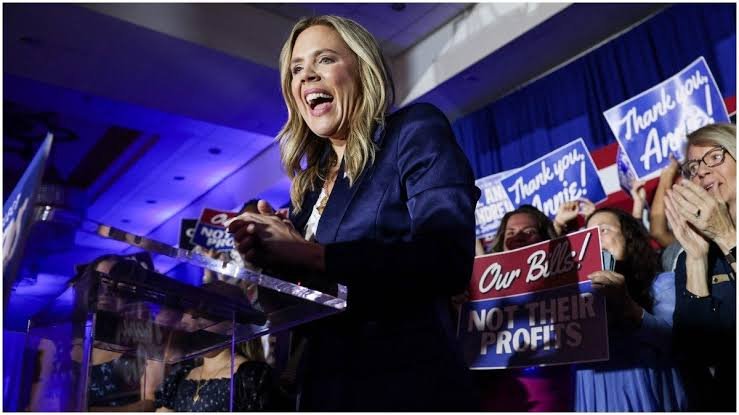
The controversy has also attracted the attention of U.S. Representative Nancy Mace.
In a social media post circulated November 17, Mace described the proposed Islamic center as a major development attempting to establish a presence in the Lowcountry.
She referenced Dearborn, Michigan, expressed opposition to the proposal, and raised concerns about Sharia law.
Her message concluded:
“One Nation under God, not Allah.”
The statement introduced a broader religious argument into the debate, rather than focusing exclusively on the project’s location, proposed design, or applicable zoning requirements.
The reference to Allah also warrants clarification.
Allah is the Arabic word for God. It is used by Arabic-speaking Muslims and Christians, although Christianity and Islam have different theological teachings and understandings of God.
Mace’s post has contributed to the public discussion surrounding the proposal and the treatment of Islam in American communities.
As an elected representative, Mace is entitled to express views about public policy, development, and religion.
Her statements, like those of other public officials, are also subject to public scrutiny and criticism.
The central legal question remains whether government decisions affecting a religious institution comply with applicable development laws and constitutional protections.
Civil Rights Organization Condemns Anti-Muslim Rhetoric
On November 17, the Council on American-Islamic Relations (CAIR) released a statement condemning anti-Muslim rhetoric expressed during the Berkeley County meeting.
The organization argued that Muslim Americans have the same right to worship, establish religious institutions, educate their children, and participate in their communities as Americans belonging to other faiths.
CAIR also criticized rhetoric portraying Muslims as incompatible with American society or suggesting that Islamic institutions do not belong in particular communities.
The organization’s response places the controversy within a broader national discussion about religious discrimination and the treatment of Muslim Americans.
Meanwhile, Husain has publicly invited residents who have concerns about the project to communicate directly with the mosque.
In his interview with WCBD, Husain emphasized that the organization is open to discussion and hopes greater interaction will help address misunderstandings.
The invitation offers an opportunity for neighbors to ask questions about the actual proposal, its operations, and its intended relationship with the surrounding community.
What Does Berkeley County’s Zoning Actually Allow?
One of the central points of disagreement concerns the property’s existing zoning classification.
The property is zoned R-1, a residential zoning category.
However, residential zoning does not automatically prohibit religious institutions.
Berkeley County’s zoning rules allow assembly and worship uses in R-1 districts. Neighborhood and community schools are also listed among permitted uses.
As a result, the proposed religious use may not require rezoning.
That does not mean the project has automatic approval to construct whatever its organizers envision.
Development remains subject to applicable county requirements, which may include site planning, access, drainage, parking, building safety, and other reviews.
The exact requirements will depend on the formal plans eventually submitted and the nature of the proposed facilities.
Until those plans are available, residents and county officials cannot fully evaluate every potential development impact.
A permitted land use is not the same thing as an approved construction plan.
And opposition to a permitted religious use is not, by itself, evidence that the use violates local zoning rules.
What Does the Constitution Say?
Religious freedom is protected under the First Amendment to the United States Constitution.
The government cannot establish an official religion or prohibit the free exercise of religion.
These protections are not limited to Christianity or any other particular faith.
They apply to religious communities throughout the United States, including Muslims.
Federal law also provides protections for religious institutions through the Religious Land Use and Institutionalized Persons Act of 2000, commonly known as RLUIPA.
According to the U.S. Department of Justice, RLUIPA protects religious institutions against certain discriminatory zoning and land-use practices.
Among its provisions, the law prohibits governments from treating religious assemblies on less than equal terms with comparable nonreligious assemblies.
It also prohibits religious discrimination in the application of land-use regulations.
These protections do not prevent local governments from applying lawful, nondiscriminatory development standards.
They do require that religious institutions receive the treatment to which they are entitled under the law.
A mosque does not lose those protections because its neighbors disagree with Islam.
Just as a church, synagogue, or temple would be entitled to appropriate legal protections, so is an Islamic place of worship.
Where the Debate Stands
As of November 18, the Central Mosque of Charleston continues fundraising for its proposed development.
The organization has not submitted a formal development plan, and Berkeley County Council has not voted to approve or reject the project.
The county has meetings scheduled for December 14, although What’s Going On In Charleston has not independently confirmed that the proposed mosque will appear on the agenda or be considered for official action.
Important questions remain regarding the project’s eventual design, development requirements, and neighborhood impacts.
Those questions deserve accurate information and a transparent review process.
But the larger controversy has also raised questions that cannot be answered through traffic reports or drainage assessments alone.
They concern whether members of a religious minority will be treated as equal members of their community.
And whether religious differences can coexist with the constitutional guarantees that protect every American.
EDITORIAL STATEMENT: WHERE WHAT’S GOING ON IN CHARLESTON STANDS
The following statement represents the editorial principles and position of What’s Going On In Charleston. It is separate from the factual reporting above.
At What’s Going On In Charleston, our mission extends beyond telling people what’s happening around the Lowcountry.
We tell the stories of the people who live here.
The people who build our neighborhoods, operate our businesses, raise families, preserve our history, create our culture, and contribute to the communities we call home.
Those people do not all look alike.
They do not all worship alike.
They do not all share the same backgrounds, traditions, beliefs, or experiences.
And they should not have to.
Our position is clear: What’s Going On In Charleston stands against religious discrimination, anti-Muslim prejudice, and the portrayal of entire communities as dangerous without credible evidence.
We recognize and respect the right of residents to question development proposals.
Concerns about traffic, stormwater drainage, noise, public safety, and neighborhood compatibility should be examined through an open and fair process.
That applies to every developer and every proposed facility.
But we reject the notion that an individual’s religious identity should determine whether they are worthy of belonging to a community.
There is a fundamental difference between saying, “I have questions about this development,” and saying, “People of this religion should not be welcome here.”
We will not pretend those statements mean the same thing.
We also believe the words of public officials carry particular responsibility.
When an elected representative speaks about a religious community, those statements deserve examination because that representative serves constituents of different faiths and backgrounds.
We will not exempt public officials from scrutiny because of their position, political affiliation, popularity, or influence.
Religious freedom is not a privilege reserved for the majority. It is a constitutional protection belonging to all.
A church deserves fair treatment.
A synagogue deserves fair treatment.
A mosque deserves fair treatment.
Every religious institution deserves the protections provided by law.
And no resident should have to defend their humanity or their right to live peacefully because of the faith they practice.
We understand that taking a clear position on these principles may invite criticism.
Some readers may disagree with us.
Others may decide they no longer wish to support our platforms.
That is their right.
But our editorial principles are not determined by social media engagement, follower counts, political pressure, or the possibility of losing an audience.
Our responsibility is to report accurately, examine claims critically, and treat the communities we cover with dignity.
We will not manufacture controversy. We will not amplify unsupported accusations as fact. And we will not disguise religious prejudice as an ordinary zoning disagreement.
At the same time, we will continue to ask difficult questions, examine government decisions, and provide space for respectful disagreement grounded in evidence.
We believe the Lowcountry is strongest when its communities are informed, respected, and free to participate fully in the places they call home.
That includes our Muslim neighbors.
That includes our Christian neighbors.
That includes people of every faith and those who practice no religion at all.
Where do we stand?
We stand for religious freedom.
We stand for equal treatment under the law.
We stand for accurate, responsible journalism.
We stand against discrimination and intimidation directed at people because of their faith.
And we stand by the responsibility that comes with serving the diverse communities of the Lowcountry.
That is where What’s Going On In Charleston stands.
What Happens Next?
The Central Mosque of Charleston’s proposal remains in the early stages.
Berkeley County will have an opportunity to evaluate the project’s specific development requirements once formal plans are submitted.
Residents will also have opportunities to participate in applicable public processes and request information from county officials.
What’s Going On In Charleston will continue monitoring the proposal, documenting public statements, and following developments involving religious freedom, zoning, and community concerns.
We encourage readers to examine the available information, consult official sources, and engage respectfully with their neighbors.
There is room for questions, disagreement, and accountability.
There is no need to invent threats or deny the rights of others to have those conversations.
The Lowcountry belongs to the people who call it home.
All of them.
Sources and Further Reading
- Central Mosque of Charleston — New Islamic Center
- Live 5 News — Mosque Plans Spark Freedom of Religion Debate in Berkeley County
- WCBD News 2 — Proposed Islamic Center Draws Debate in Berkeley County
- The Berkeley Observer — Proposed Islamic Center Sparks Heated Opposition
- Change.org — Petition Opposing the Proposed Development
- CAIR — Response to Berkeley County Meeting
- Berkeley County Government — Meeting Calendar and County Information
- Berkeley County Zoning Ordinance — Permitted Uses
- U.S. Department of Justice — Religious Land Use and Institutionalized Persons Act
Editor’s note: This article incorporates publicly available statements and reporting as of November 18, 2026. WGOIC has not conducted independent interviews with the individuals quoted by other news outlets. The publication’s editorial statement is clearly distinguished from its news reporting.
What’s Going On In Charleston — Not First. Best.